Author: Mariela Guanchez
From Sunlight to Socket: How Solar Panels Work
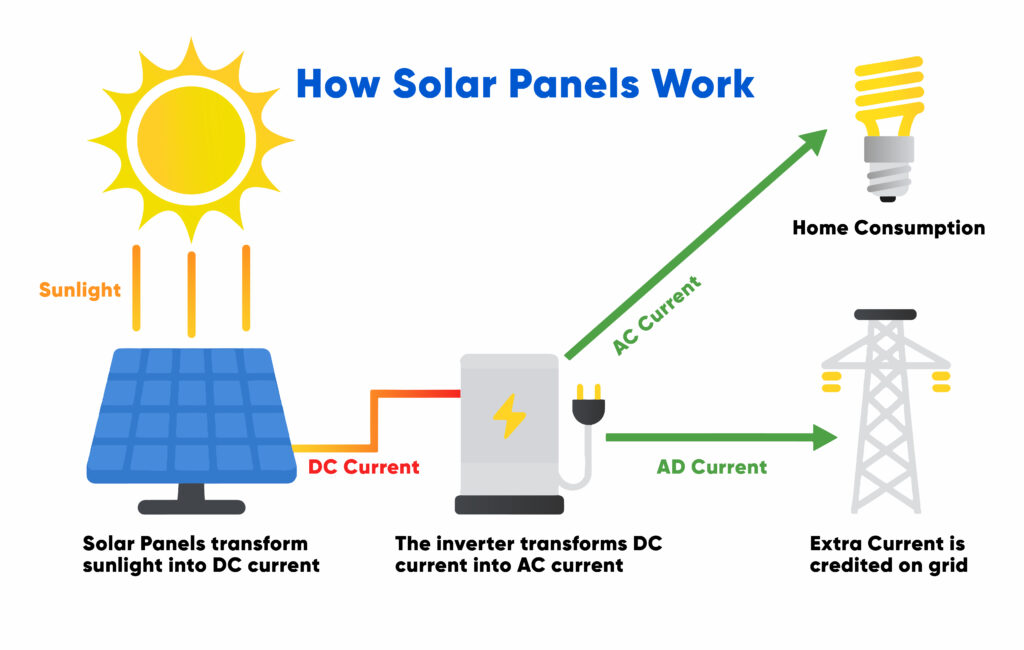
Firstly, sunlight sends streams of photons that strike the crystalline-silicon cells inside each panel. Those photons knock electrons loose, creating a direct-current (DC) flow.
DC to AC via the “Translator”
Because homes run on alternating current, a smart inverter—central or micro—flips DC into grid-ready AC in milliseconds. Modern microinverters even track each module’s output separately, limiting shade-related losses.
Riding the Nova Scotia Grid with Net-Metering
Consequently, surplus midday kWh spin backward through the meter, earning retail-rate credits you can spend on cloudy evenings. The provincial program delivers a true 1-for-1 swap, trimming most bills to the $20 service fee.
Why Cool Atlantic Air Helps Panels Work Harder
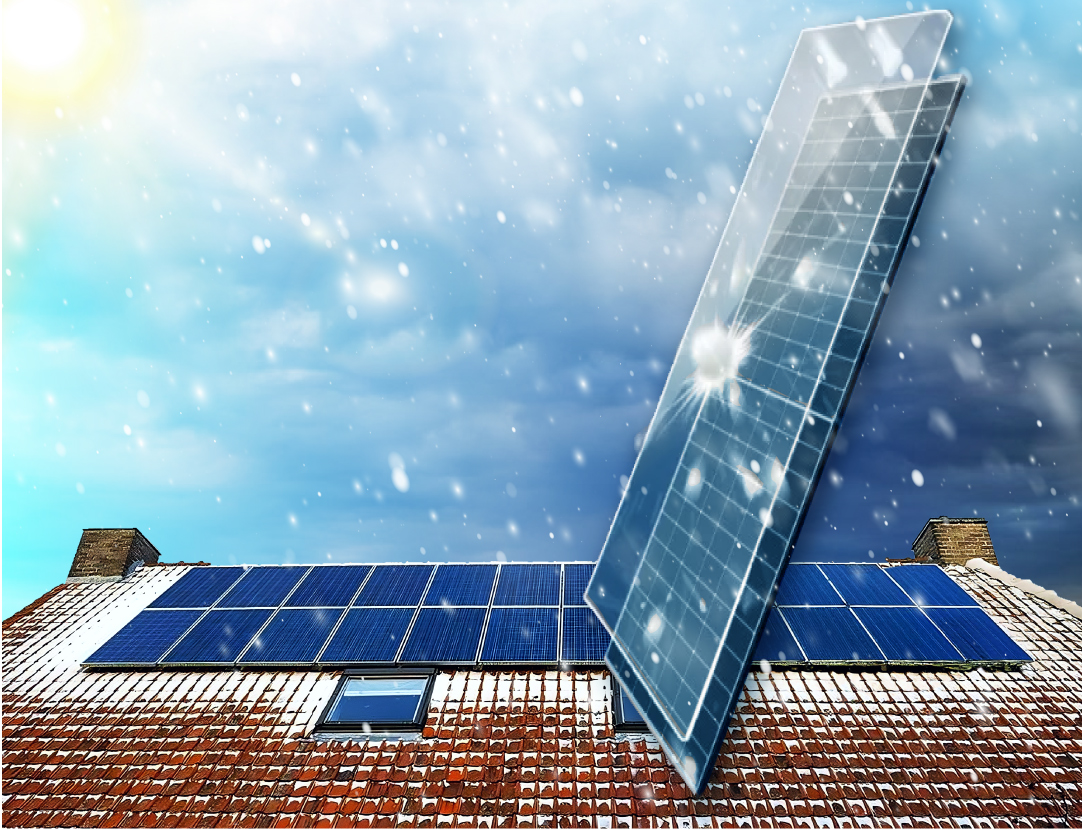
Moreover, cell voltage rises as temperatures drop, so Halifax’s brisk climate actually nudges efficiency upward—another small win, much like catching a fresh breeze back home.
Core Hardware at a Glance
|
Component |
Role |
Nova Scotia Tip |
|
JA Solar JAM54D41-440/LB |
Converts sunlight (22 % efficient, 440 W) |
Rated 5 400 Pa snow & 225 km/h wind—built for Nor’easters |
|
Inverter |
DC→AC conversion, monitoring |
Microinverters shine on complex roofs |
|
Mounting |
Keeps array secure |
Stainless fasteners resist Atlantic salt-spray |
Grid-Tied vs. Off-Grid—Which Works for You?
Grid-tie dominates because batteries add cost, and net-metering already banks your summer excess for winter needs. Off-grid suits cabins but demands hefty storage.
Lifespan & Maintenance
Solar panels keep humming for 25–30 years, still producing roughly 80 % of their day-one output. On most Nova-Scotia rooftops, normal rain and snowmelt are enough to keep the glass clear, so day-to-day upkeep is practically hands-off.
If your monitoring app ever shows an unexpected drop in generation, please don’t climb a ladder—safety first. Simply contact Atlantic Solar’s technical-support team and we’ll guide you through remote diagnostics or arrange a qualified technician to inspect the array and inverter.
Typically, the only mid-life service your system might need is an inverter replacement, and that’s covered by warranty and handled professionally—no DIY cleaning required.

Next Steps & Deep Dives
- Peek inside a module in How Solar Panels Are Made: Silicon to Clean Energy.
- Ready to install? Follow Install Solar Panels in Nova Scotia: Step-by-Step Guide.
- Curious about cold weather? Check Winter Solar in Nova Scotia: Maximize Cold-Weather Output.
Conclusion
In short, photons jostle electrons, an inverter translates, and Nova Scotia’s grid tallies the credits—simple science delivering steady savings. Book a free assessment and watch your roof turn sunshine into dollar signs.